Supplier Spotlight: Growing Change, A Q&A With GLC Cerritos

What does it take to bring a socially responsible avocado to market, and what’s standing in the way? In this feature, Madelyn Edlin, Product Marketing Manager with EFI, speaks with Giovanni Cavaletto, CEO USA for GLC Cerritos, about their innovative “2 Cents” campaign, their approach to sustainability, and how Fair Trade is empowering farmworkers to lead change in their communities. From navigating certification challenges to embracing a culture of continuous improvement, GLC is proving that meaningful impact can start with just a few cents. 

I really admire your “2 Cents” campaign. Could you talk more about the challenge of encouraging retail buyers, and ultimately consumers, to pay just a little more for a socially responsible avocado?

Avocados have historically been priced higher than many other produce items, which can make some buyers hesitant to take on a premium-priced product. We saw a similar pattern about 10 years ago with organic offerings. Once mainstream retailers began stocking organic produce, they saw an immediate and positive return on investment.

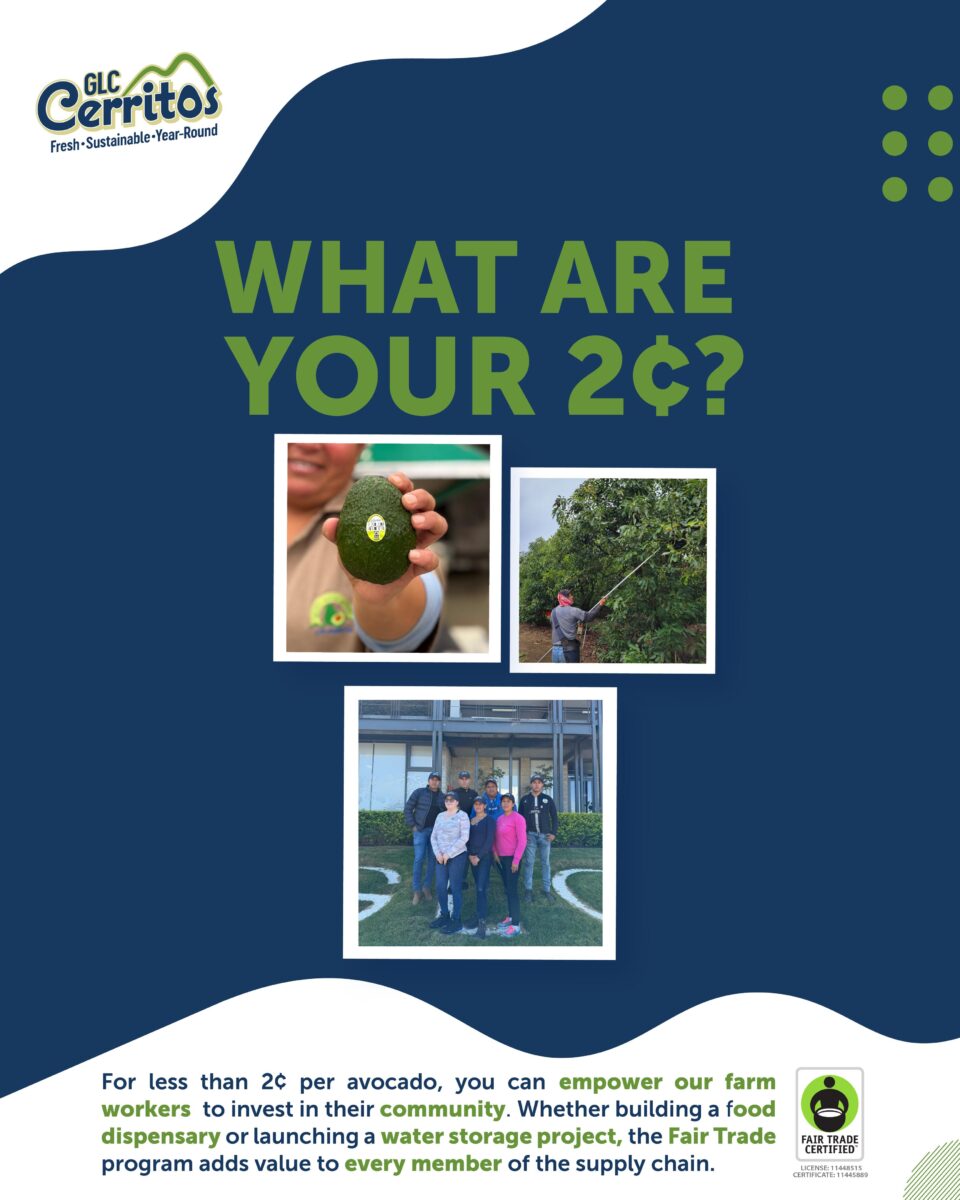
The goal of the “2 Cents” campaign is to put the added cost of Fair Trade into perspective. It only adds about two cents (or less) per avocado for the consumer. That small premium can make a big difference, not only empowering farmworkers through leadership and community development, but also helping retailers stand out, especially if they’re the only one in their area offering Fair Trade avocados.

You’ve mentioned that some of GLC’s orchards are still quite young. What plans do you have in place to ensure strong social and environmental practices as those farms mature?

We’ve been on this sustainability journey since 2012. Last year, we added organic offerings and brought on a dedicated Sustainability Director. This month, we’ll be publishing our first Sustainability Report. Our mission is “To inspire fellow growers through sustainability to grow healthy food.” The Medina family, the founding family who began growing avocados in the early 1990s, has created a culture of continuous improvement, which ensures that these practices are not just implemented but embedded in how we grow.

Certifications like GLOBALG.A.P., Rainforest Alliance and Fair Trade can be challenging for avocado producers to obtain. How was GLC able to meet those standards successfully?

We see these certifications as valuable platforms to help share the positive role farming plays in our communities. Yes, the process can be intimidating at first, but over time, our team has learned how to navigate them. They’ve helped us differentiate GLC Cerritos not only in the U.S., but also in Asia, Europe and Canada. We view them as investments, tools that help us tell our story and live up to it.

You’ve said that GLC isn’t satisfied with the status quo. What does that mean in practice?

Our sustainability journey began in 2012 with a best practices survey for Mexico’s Secretary of Agriculture. Growers, by nature, tend to have a sustainability mindset, they’re farming land that often belonged to their parents or grandparents, and they want to pass it down to future generations. Since then, we’ve led or participated in numerous initiatives, including Stronger Together, pollinator protection programs, and, most recently, adding organic and Fair Trade offerings.

Joining the Ethical Charter Implementation Program is a natural next step. It reinforces our commitment to setting an example in the Avocados from Mexico category.

And finally, could you share a story about a farmworker who sparked change or drove an improvement?

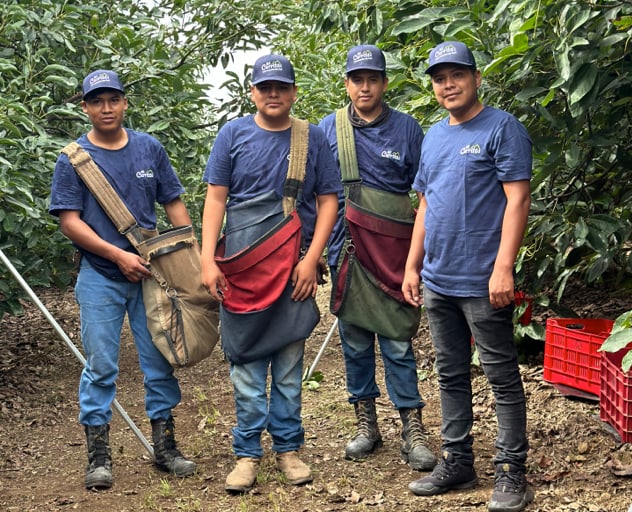
Our Fair Trade committee members are incredibly inspiring. They’re elected by their peers and meet regularly to decide how to invest Fair Trade funds in their communities. One recent example stands out: after careful consideration and research, the committee chose to invest in a food dispensary and water storage project.

They weighed multiple options, thought through the impact and are now seeing that project through to completion. It’s just one of many examples we could share about how farmworkers are taking leadership and creating lasting, positive change.

Skip to content