

WASHINGTON, May 19, 2026 – The Ethical Charter Implementation Program released its second annual industry report, highlighting significant growth in participation and measurable progress in how the fresh produce industry approaches responsible labor practices.
Building on momentum from the program’s inaugural year’s success, ECIP scaled rapidly in 2025, with more than 300 suppliers and 1,700 growers now participating in the Learn, Assess and Benchmark platform, ECIP LAB. This expansion reflects broad industry adoption of ECIP as a practical, non-audit approach to strengthening labor management systems and advancing continuous improvement.
Engagement across the platform deepened substantially. The number of suppliers earning two or more engagement stars rose from 41 to 137. This 234% increase year over year signals stronger alignment with principles in the Ethical Charter on Responsible Labor Practices and more active supply chain participation.
Kenton Harmer, who is director of market-based impact at Equitable Food Initiative, overseeing the ECIP software platform and providing technical support, said, “Strong renewal rates are showing that suppliers and growers see real value in ECIP, using it to benchmark progress, strengthen systems and stay aligned with evolving expectations around responsible labor practices.”

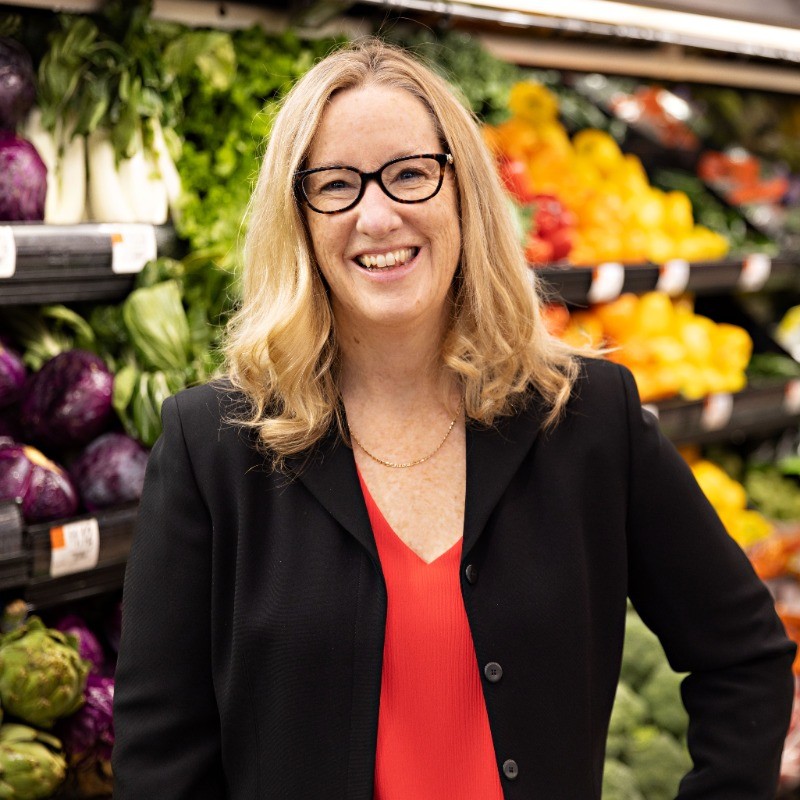
“We are excited to celebrate the growth ECIP experienced in its second year and believe it is on a trajectory to scale across the produce value chain,” said Laura Himes, vice president, produce sourcing for Walmart. “More importantly, the continuous improvement tools and resources that ECIP offers are helping develop a more resilient industry through stronger management systems and responsible labor practices.”
Grower engagement also accelerated. By the end of 2025, 60% of participating growers were classified as highly engaged by earning three or more engagement stars or through their participation in an approved third-party audit program that qualifies them for a gold star.
“What we’re seeing in this second annual report is not just growth in numbers, but growth in how suppliers and growers are using ECIP to build stronger management systems, engage their workforce more effectively and demonstrate continuous improvement over time,” concluded Harmer.
The report highlights key areas of strength across the industry, including more structured oversight of grower networks, clearer contracting practices and stronger internal accountability systems among suppliers. Among growers, foundational practices such as freely chosen employment, worker communication systems and documented management processes are becoming increasingly standardized.
“ECIP has become a key component of how we operate at Costco,” shared Amanda Kuhn, produce buyer at Costco Wholesale. “We encourage our suppliers not only to join the platform, but also to meaningfully engage with its tools and resources to strengthen their labor practices and drive continuous improvement. We’re excited to see the broader industry embrace this important program and its impressive growth in such a short time.”

Geographically, ECIP participation now spans across North, South and Central Americas and South Africa, underscoring the program’s relevance across diverse production regions and supply chains. Mexico is the single most engaged geographic location with dense activity in the United States and Canada anchoring the system.
As the program enters its third year, ECIP continues to expand its tools, resources and reach, including new developments designed to further support labor management across the agricultural workforce.
To access the full report visit, ethicalcharterprogram.org/report.
About ECIP
The Ethical Charter Implementation Program is a collaboration among retailers, grower-shippers and implementing organizations to recognize and strengthen engagement around labor practices in the fresh produce industry, highlight existing best-practice efforts and identify opportunities for continuous improvement. The program is built around self-assessment to avoid the burden of an additional audit. Through an assessment tool and capacity-building resources, it helps measure and strengthen alignment with the principles of the Ethical Charter on Responsible Labor Practices. Launched with initial funding from the Walmart Foundation and administered by Equitable Food Initiative, the program is overseen by an advisory group composed of leading buyers and suppliers and key stakeholders, including representatives from Bonduelle Fresh Americas, Costco Wholesale, Kroger, Mastronardi Produce, McDonald’s USA, Naturipe, Peterson Farms Family of Companies, Sam’s Club, Sysco, Tanimura and Antle, Target, Taylor Farms and Walmart.